The Patent Piler

I met Allan Tokuda when I was a Teaching and Research Fellow at Northwestern University. I was helping teach a course on Innovation and Invention in the engineering program. Allan was one of the brighter and more inquisitive students. I knew he had some remarkable qualities when, before class one day, he took out a Rubik’s Cube. He could consistently scramble the puzzle and solve it in less than two minutes.

Allan and I eventually put our minds together to attack the problem of patent claim language and its obfuscating qualities. Allan brought top notch software coding and logical analysis. I brought my knowledge of claims and claim structures and the problems lay people and inventors routinely face when they try to read these sentences. Patent claims, for those new to patents, are the legal definition that describes the property boundaries of a patented invention. Patent claims are what get litigated in court and are located at the very end of the patent document.

The result of our combined efforts is something called the Patent Piler (at this Website). It is an open source project and resource guide that allows anyone to look up a patent by the patent number, search and compare any of that patent claims with other claims in the patent. Here is an image of how it works.

Patent Piler
Patent Piler

The tool, as shown above, highlights the differences between claims in the same patent.

Why is this useful? Oftentimes the most confusing thing about reading patent claims is distinguishing why one claim is different from another. One claim might be different from another due to a difference of just a few words.

The software also does useful things like break down claims by their type, for example methods, products, chemical compounds  or machines. The software also allows you to select independent claims, those claims which stand by themselves and are modified by subsidiary claims, called dependent claims.

Try it out for yourself. If you don’t have a specific patent to analyze, try inputting this curious patent number in the box: 6584450

If you like to code and want to make reading patent claims easier, try improving the source code, it is freely available at this site.

A quick note: for now the software runs great on Firefox, not so great on Internet Explorer.

Starwood Hotels Alleges Trade Secret Theft

W Hotel
W Hotel

Starwood Hotels, owners of the W Hotel brand of boutique hotels, filed a lawsuit against Hilton Hotels and several former Starwood executives hired by Hilton. The lawsuit alleges trade secret infringement.

The complaint alleges that Hilton lured key W Hotel executives and that these individuals misappropriated W Hotel trade secrets to help Hilton with the launch of its Denizen brand of boutique hotels. The trade secrets listed in the complaint include:

  • Proprietary marketing and demographic studies that cost more than $1,000,000 to develop.
  • Training and operational materials.
  • The names of designers, property owners and developers.
  • Guidelines for how to create the “Ultimate W Experience’ in converted properties.
  • A dining concept called a “restro-lounge” designed to optimize food and beverage services in the W Hotel lobby-bar areas.

This is just another example of how far-reaching intellectual property has become. As brands become more important and as innovation touches on customer experiences created by companies, the intellectual efforts used create these assets will increase in strategic importance.  This kind of competitive knowledge is safeguarded by contracts called confidentiality agreements. Starwood Hotels required its executives to sign them, and this may be an important factor in this trade secret fight.

To read the entire complaint filed in District Court of New York, click here:  starwood20complaint

Blogger Sues Goldman Sachs For Domain Rights

It would be an understatement to say that Michael Morgan dislikes Goldman Sachs. Mr. Morgan expresses his vitriol against the large investment bank in not-so-subtle terms. Mr. Morgan writes on his blog: “Yes, I am short Goldman Sachs stock. I believe this company is evil and should not exist. We need to begin to break up companies that have as much control over world finances as Goldman Sachs.”

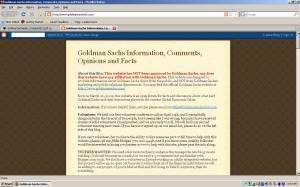
His explicit contempt, however, is not what drew the ire of Goldman Sachs and its attorneys. Instead, it’s the domain name that Mr. Morgan reserved to express his views. The domain name for Mr. Morgan’s blog is goldmansachs666.com. As Mr. Morgan writes, his blog’s purpose is to serve as “an open forum for facts and discussion about what part Goldman Sachs and their executives played in the current Global Economic Crisis.


goldman

On April 8, 2009 Goldman Sachs’ attorneys fired-off a cease and desist letter to Mr. Morgan. The letter states “your use of the mark Goldman Sachs violates several of Goldman Sachs’ intellectual property rights, constitutes an act of trademark infringement, unfair competition and implies a relationship and misrepresents commercial activity and/or an affiliation between you and Goldman Sachs which does not exist and additionally creates confusion in the marketplace.”

gs_letterimage

Mr. Morgan had several options at that point. He could have ceased using the domain name as requested by the letter. He could have ignored it and risked further legal actions. Or, sue Goldman Sachs and petition a court to uphold his use of the domain name as a legal use, and not a trademark infringement as claimed by Goldman Sachs. Mr. Morgan chose this last option, and has filed a complaint in the United States District Court – South Florida. Click here to read the complaint.

Liquidators Buy Bankrupt Brands For $175 Million

The New York Times has a great story on entrepreneurial companies that have purchased bankrupt company brands. Among them: Sharper Image, Linens ’n Things and Bombay.The price for these three trademark rights is estimated at $175 million.

Use I.P. To Increase Your Company’s Value

In the knowledge economy, two-thirds of a company’s balance sheet assets are comprised of intangible assets. The true value of companies no longer resides in factories or real estate. It resides in the minds of talented employees and in the intellectual property these employees generate, properties like trademarks, trade secrets, designs, know-how, copyrights and patents.

Yet intellectual property is notoriously hard to value. Why? Because unlike most other assets, there is no transparent public market that matches many buyers and sellers. Also, intellectual property is often highly specialized and context-specific, making it hard to develop value models based on similar transactions.

A similarly difficult value determination involves setting a price on your start-up, since there are few cash flows. However, as entrepreneurship guru Tim Berry mentions in his post “5 Concerete Steps to Starting Valuation“, the value of your start-up depends on the “cards you bring to the table.” As Tim mentions, you can improve your hand by owning a defensible product with intellectual property. So, before you shop around for investors, build a portfolio of intellectual property rights and use them as bargaining chips to negotiate value. It can mean the difference between giving up a majority stake in your business vs. giving up only a minority stake.

To learn more about intellectual property valuation methods click here.

Borrowing Blue

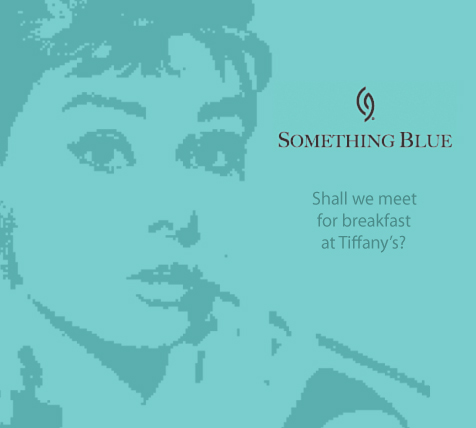
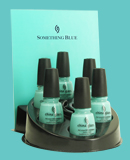
Smart marketing. That is what comes to mind when I think about what China Glaze has done with the branding behind its For Audrey nail polish. Take a look at the product.

For Audrey Nail Lacquer Ad
Something Blue Counter Display

Did you notice the clever associations the nail polish company created by relating the product to the blue color associated with an iconic jewelry store? Or the movie with that store’s name?

On its Web site, China Glaze calls this product a “Tiffany inspired turquoise creme nail lacquer”. But the word “Tiffany” does not appear anywhere on the nail polish bottles or the store displays.

Why is this all so clever? Because the color conjures up images of exclusivity, allure, romance and also a bit of decadence. How did this come about? There is actually a trademark tale behind it all. Tiffany & Co. owns the trademark exclusive rights to use the color robin’s egg blue for boxes, shopping bags, packaging and catalogs in various markets, including fragrances, tableware and crystal. The famous luxury retailer has done a magnificent job of managing this exclusive trademark color in the market for high-end luxury items.

Has China Glaze infringed the color trademark owned by Tiffany & Co.? Not likely since their nail lacquer is not included in the above categories.

Will Google Shut Down Copycat Site?

A student in my Entrepreneurship class recently made me aware of the site: “Let me Google that for you” .com (LMGTFY).

As the name of LMGTFY implies, the site shows you how to search Google if you follow the simple steps listed on the site. I showed the website in class, and one student immediately thought it was a joke. “That’s not so unique” was one comment. “Why not get rid of the middleman and go straight to Google?” another student asked.

As it turns out, the website is dedicated “to all those people that find it more convenient to bother you with their question rather than google it for themselves.” So, if you receive an annoying question, rather than ignore the person or say something nasty, you can send them to LMGTFY and hope they get the message not to bother you again.

The website raises some intellectual property issues, however. I asked the class if they would be willing to invest in this company. The site apparently is trying to raise advertising revenues and claims to have a “steady stream of traffic made up primarily of affluent 30-somethings.” They also claim to have received 1.25 million visitors in February. One student said he would not invest because Google would be able to “shut them down fairly quickly”.

Under what grounds? First, there is the possible trademark issue since the Google trademark and logo are used on the site. Also, the Google website is secured under copyright.