News Brief: Lingerie Entrepreneur gets to Bottom of I.P. Controversy

Pop culture critic and journalist C.E. Hanifin recently pointed out a fascinating intellectual property controversy at Target Addict. That blog comments on a news story run by The Virginian-Pilot, involving I.P. and lingerie.

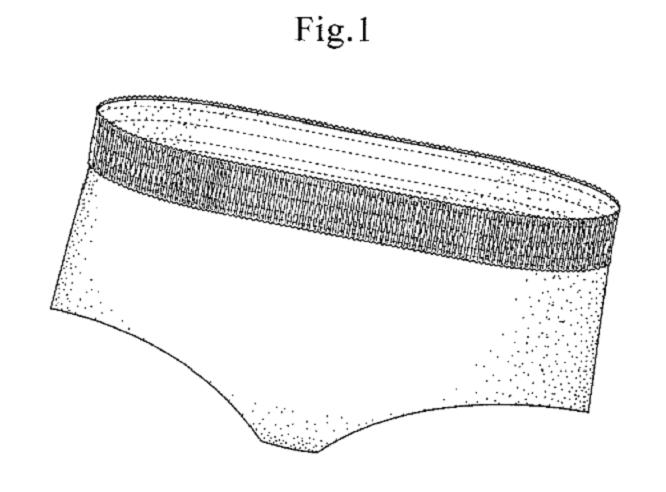
April Spring, of Norfolk Virginia,  obtained a design patent in December, 2008 for a design of women’s briefs marketed under her Foxers brand. This is the image of the design patent, as it was issued by the U.S Patent Office.

Design Patent D581,628 for Women's Briefs

Spring’s design attaches an elastic waist band to the briefs, much like those seen on men’s boxer shorts.

Spring filed a lawsuit against Target, Corp. alleging the retailer knocked-off her design. The Foxers briefs are normally priced at between $20 to $26 a pair. The Target briefs that allegedly rip-off her design are priced at around $5 a pair.

Note: design patents are a special type of patent and differ from utility patents, which cover working inventions. Design patents cover only the ornamental look of a product, as opposed to how the product works.

Entrepreneurship in Hard Times

Dr. Kanwal Rekhi’s innovations provided the foundations for the Internet. His start-up company, Excelan, developed and sold the computer hardware that allowed distributed computing to flourish, helping to usher in the age of the network. Dr Rekhi eventually sold Excelan to Novell and then eventually became a venture capitalist, helping to fund more than 50 companies in Silicon Valley. Six of them went public.

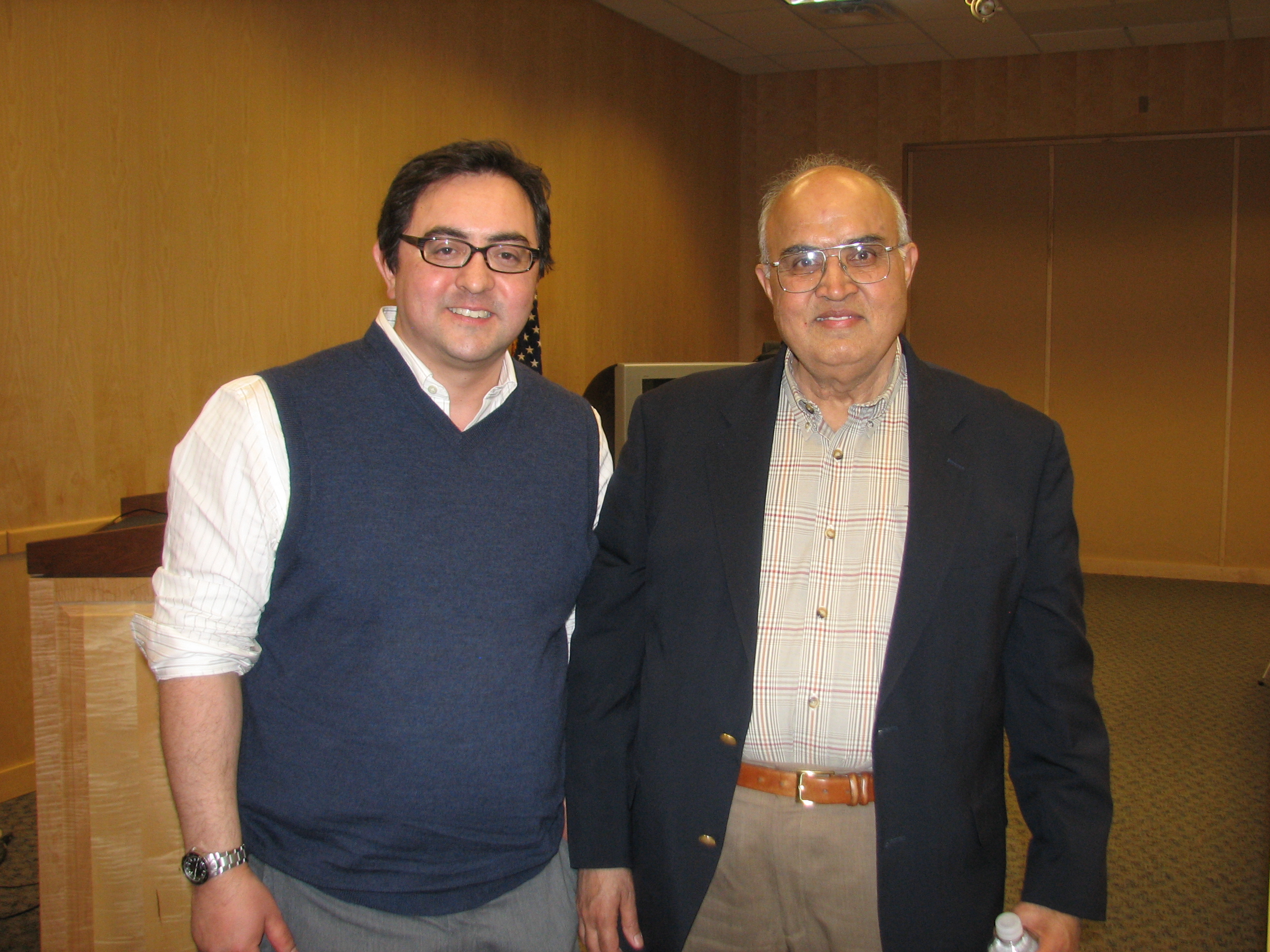
Michigan Technological University had the honor of hosting this very distinguished alum. Dr. Rekhi received his masters in electrical engineering in 1969 from Michigan Technological University.

I had the unique pleasure of hosting Dr. Rekhi in my Entrepreneurship class. I also attended his lecture on “Entrepreneurship in Hard Times” on March 4, 2009. Dr. Rekhi gave an amazing an inspiring speech. During this speech he spoke about the virtues of bucking the trend, and starting your own business during tubulent times.

These are Dr. Rekhi’s top 10 traits for an entrepreneur. They readily apply to anyone who aspires to innovate:

Top Traits of an Entrepreneur

1.    Intellectual honesty. Brutal honesty. You can never fall in love with your business. If you do, you will fail to make the hard but necessary decisions.

2.    Humility.

3.    Accountability to yourself and your team. You ultimately have to be able to say that you accomplished something or that you did not. If not, why not? You cannot ever blame others. If you fail, it is on your shoulders — no excuses. If there is no accountability at the top, others below also will not feel accountable.

4.    Fairness. You have to be able to make sure the rewards are proportional.

5.    Economics. You have to be able to determine values and prioritize these values. The highest value-added issues get prioritized. You also have to understand the fundamentals related to costs and margins.

6.    Expertise. You have to be an expert when it comes to your customer and competition.  Although you also have to quickly become a generalist. You don’t have enough money when you start out to hire specialists.

7.    Execution intelligence. Investors pay a premium for this rare skill. For every great idea that you have, there are 10 very smart people with the same idea. What will make the difference is the ability to execute. Ideas are a dime a dozen.

8.    Leadership. When times are tough, pull everybody up. Inspire others to look beyond today. When times are good, keep everybody grounded; don’t get too exuberant.

9.    Self-reliance. Entrepreneurs do not need any approval. This comes from within. Also, there is little daily satisfaction; success comes in the long run.

10.    Confidence. Success loops are long, so you need to be confident and patient to reap your rewards.
Matsuflex

“I have the name Matsuflex. If I can harness that Matsuflex energy, it’s gonna help change America in a positive way!”

Matsuflex
Matsuflex

These are the words of Ryan Matsunaga, a.k.a. Matsuflex, one of the participant’s on VH1’s reality t.v. show The Tool Academy. Matsuflex, is one of the program’s finalists and has made a point of advertising his name as often as possible. During a recent show, one of the show’s attendee’s asked “What’s Matsuflex? It sounds like an energy drink.” Here’s another suggestion, a Matsuflex sounds like a pull-up machine hawked on late night t.v. The point is, the name Matsuflex may have real commercial value.

If that is the case, Matsuflex would do well to trademark the name as soon as possible. I ran a quick search at the United States Patent and Trademark Office (USPTO) database and was unable to find a trademark registered as Matsuflex, which means it is still open for someone to claim, so long as they can prove they will offer something for sale called Matsuflex in a particular class of goods or services.

Matsuflex should think about running to the USPTO to claim the name, if he hasn’t done so already. Otherwise, an unscrupulous entrepreneur might take it over, and misappropriate all that positive Matsuflex energy.

Board Game Manufacturer Trumps The Donald

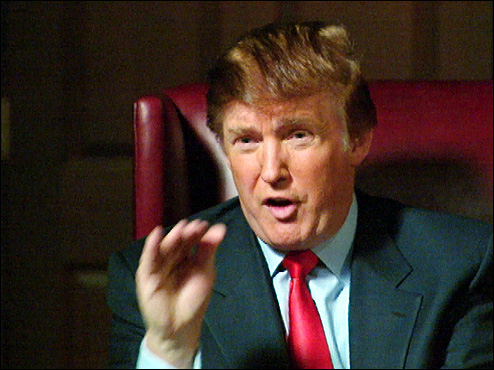
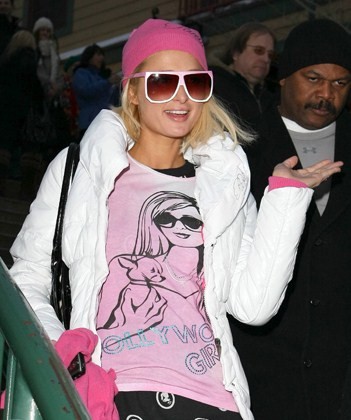
Donald Trump tried to register the phrase “you’re fired” but was denied. Paris Hilton was allowed to register “that’s hot”. What gives? The law of trademark.

Trademark law accomplishes two important objectives: 1) it protects investments to build brand equity in a trademark; 2) it protects consumers from the likelihood of confusion in the marketplace. The second reason explains why the Donald was rejected, and Paris was not.

Another important item to consider is that trademarks are only registered for goods that are actually sold in narrowly defined product markets.

The United States Patent and Trademark Office examiner rejected Donald’s “you’re fired” trademark application in the class of goods for “games”. The rejection was based on a previously registered trademark: “you’re hired”. A company, called Franklin Learning Systems, had registered “you’re hired” for one of its educational board games. The examiner determined that “the similarities between the marks and the goods of the parties are so great as to create a likelihood of confusion.”

In Paris’ case, no one had registered anything similar to “that’s hot” as a federal trademark for the classes of goods and services she applied for, including “men’s and women’s clothing”.

Cohen and copyright

The New York Times recently reported a story on the singer and composer Leonard Cohen’s upcoming tour, after a 15-year hiatus from live music performances.

Here is one of Mr. Cohen’s quotes that most grabbed my attention (he is speaking about the ownership of his songs, which have been popularized by other, younger performers):

“My sense of ownership with these things is very weak,” he responded. “It’s not the result of spiritual discipline; it’s always been that way. My sense of proprietorship has been so weak that actually I didn’t pay attention and I lost the copyrights on a lot of the songs.”

When I mentioned this story to C.E. Hanifin, the acclaimed journalist and music critic, she said: “If Leonard Cohen can’t keep track of his copyrights, I’m sure there are a lot of other artists who need help, too.”

Even if you don’t own a Leonard Cohen album, you are probably familiar with some of his songs. As the New York Times article pointed out, many popular artists have covered his works. For example, Cohen’s song “Hallelujah” has been covered more than 200 times by such artists as Jeff Buckley and John Cale.

How different from other artists (like The Beatles) who zealously guard their intellectual property.

So, how does one lose a copyright?

There are several ways. First, you can neglect to read a contract from, say, a manager or corporation like a media company who gets you to assign your creative content rights to them. Along similar lines, you can sell the rights. Or, you can donate them to the commons through a public release, or creative commons-like license.  Be wary, since once that copyright is gone it is usually very hard to get back.

Regardless of whether an artist decides to defend or give up their copyrights, every creative person should at least know the basic rules so that they can choose which path to take.

Acknowledgements: C.E. Hanifin.

Trademark a catchphrase?

A catchphrase, a.k.a. tag line in marketing parlance, can be registered as a federal trademark if customers recognize the phrase as the source of a product or brand.

Below are three catchphrases associated with particular celebrities. Two of these phrases have been successfully trademarked. Try to guess which one failed to make the cut.

Paris Hilton
"That's hot"
"You're fired!"
"You're fired!"
"Two thumbs up."
"Two thumbs up."

I’ll post the answer this Wednesday, along with a discussion about trademarking catch phrases in general.

A Fail Whale Trademark?

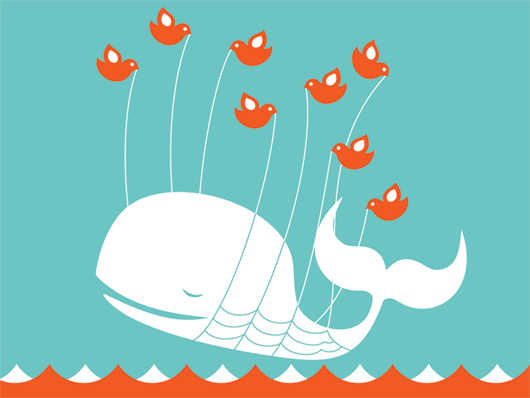
I recently sent a call to readers asking for stories to blog about. Mr. Joe Scarry from Chicago kindly sent me a recent article in the New York Times Magazine profiling the curious rise of the Fail Whale.

The Fail Whale
The Fail Whale

The Fail Whale image was created by Ms. Yiying Lu. Ms. Lu initially created the image to send as an e-card to a friend. Eventually, she uploaded the image to iStockPhoto. Under the iStockPhoto image license terms, the image was made available for a few dollars under a perpetual license.

Things unfolded when Mr. Biz Stone, one of Twitter’s founders, purchased an iStockPhoto license of the whale image. Mr. Stone used the image so it would appear on Twitter whenever that site experienced an outage due to heavy traffic (a smart branding move in my opinion since the image is funny, unexpected and connotes teamwork). The Twitter community quickly grew fond the whale image. One of the fans named the image the “Fail Whale”. Another fan tracked down Ms. Lu and her online fame only grew from then.

There is now a Fail Whale fan club, Flickr site and community art site. In true Web 2.0 spirit, the Fail Whale image has become part of a community’s culture.  The community owns the image, freely adapting the image in new ways. It was a community member who first named it the Fail Whale. Many of the community websites use the Fail Whale term without worries about ownership. Here is what the Fail Whale fan site says about itself:

“This site is here to poke fun at the people who seem to take online social network downtime a little too seriously. Failwhale.com is not affiliated with Twitter. Rather, it’s a love letter to the hard working folks at all of our favorite online social networking sites who lose sleep over the concept of scalability.”

The community for all purposes owns the whale. Will that someday change since it has become valuable? Ms. Lu already took the image off the iStockPhoto site which allowed users to perpetually license the image for a low price. She has also  recently created an official Fail Whale Merchandise Site. The next logical step to build a business around the Fail Whale is to apply for a trademark, and then license the trademarks for merchandising. (Note: a copyright can eventually become a trademark if it identifies a source of goods).

Will the Fail Whale remain open for the community’s free use? Would that be the best thing? Or, will it be Generation Y’s version of Micky Mouse or Hello Kitty? The next time you see the Fail Whale look closely. You just might see a small round trademark symbol.

P.S. Have you lately come across an intellectual property controversy that piqued your interest? If so, please send it my way.

Copyright Battle Over Obama’s Image

Artists borrow material to create new art. This practice is widely acknowledged and condoned in art circles. Daniel Grant makes this point in a recent Wall Street Journal article. Mr. Grant also points out, however, that copyright law can potentially render artistic borrowing an unlawful transgression. What is routine practice in the arts may lead to litigation and an intellectual property minefield.

Mr. Grant’s article discusses the Rogers v. Koons case. In that case the renowned artist Jeff Koons was sued by photographer Art Rogers. Mr. Koons made an unauthorized sculptural and literal rendition of a photograph taken by Mr. Rogers that depicted a family with eight puppies. A federal court found that the sculptural representation amounted to copyright infringement. Mr Koons unsuccessfully argued that creating the sculpture from the photograph was a transformative social commentary. This type of commentary, he argued, was an important artistic activity. It was a good argument, but not a legally persuasive one.

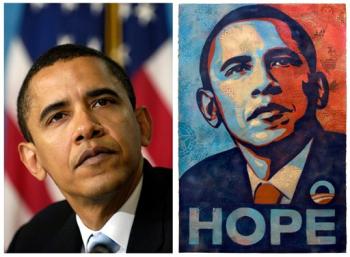
The Rogers v. Koons case was decided in 1992. Seventeen years later, a very similar case is now publicly unfolding. This case also involves an artist and a photographer. In this case, the artist is Shepard Fairey, who created the Obama Poster shown below from a photograph taken by photographer Mannie Garcia. Mr. Garcia, who is a freelance photographer, was working for the Associated Press at the time he took the photograph, shown below next to the poster image. Mr. Fairey based his image on the photograph without asking the Associated Press for permission. Now, Mr. Fairey has sued the Associated Press to have the copyright issue resolved.

AP Photo vs. Mr. Fairey's Rendering

The question, however, remains contested. How can one determine if their new work has unlawfully copied another work? How much borrowing is permitted? Prior cases, like Rogers v. Koons state that an original work is copied when “the accused work is so substantially similar to the copyrighted work that reasonable jurors could not differ on this issue.” That is a fuzzy boundary that is determined on a case-by-case basis.

So here’s my question: