Ann Arbor


A few days ago, I had the honor of lecturing MBA students at the Ross School of Business (U. of Michigan) about trademarks. In addition to meeting with the wonderful business law faculty at that august institution, the following recollections of that short trip vividly stand out:

Knit-work graffiti.

Cold, bright Midwestern mornings.

Driving along the Huron River.

Walking through the crowded quadrangle.

Smartly dressed students.

Young people embracing timelessness.

To watch the trademark lecture I presented, click here.

Will a Green Patent Exchange Take Root?

Photo taken by Lars Schmidt

Silicon Valley is officially out of the dumps. Leading the way into our brave new world is clean tech. What is clean tech? The term is broad, and includes any type of novel technology that reduces our carbon footprint, by utilizing renewable energy or lessening the harmful impacts of carbon-based energy sources.

I met clean tech empresario Nikhil Jain back when I was at Michigan Tech. He offered to guest lecture my entrepreneurship class, and subsequently was available via skype to speak to the students about his latest venture, an online marketplace for ideas called OnGreen.

I received a call today from Nikhil, and learned of his latest venture: the OnGreen Patent Exchange (OGPX). This online marketplace of ideas aims to connect parties interested in clean tech-related patents. Yes, patents. The OGPX hub aims to stimulate investments and deal making in green technologies currently secured by patents.

The idea is compelling. It also highlights one of the major issues facing buyers of technology. There is so much innovation and information being claimed, it can be daunting to find the right partner or complement in a rapidly rising sea of patented technology. Hopefully, entrepreneurs like Nikhil will make it happen sooner rather than later so we can begin to enjoy the benefits of the next wave of green technologies.

The OnGreen Patent Exchange is located here.

New inquiries

Photo by readerwalker on Flickr of a hallway at Florida State University

Dear Readers:

It’s been more than 100 days since I last updated. The last time I added an entry, I was living in the Upper Peninsula of Michigan enjoying 70 degree weather, clear summer days and sunsets at 9:00 p.m. in the evening. There is much to say in favor of the far north. Now, I’m updating the site from the Deep South, in a place called Tallahassee, Florida. One colleague recently teased: “you’re not in Kansas anymore!” So true.

I have high hopes for updating regularly. I also want to move the content in a new direction, including a broader scope and greater emphasis on culture and society.

Sincerely,

Prof. Orozco

Several ways to protect a website

How does one protect a website with great functionality and excellent design? The default is to obtain copyright on the expressive elements of the website. However, these other means are also used:

Utility patents can secure innovative functionality as a method/algorithm. For example, Netflix obtained this patent to secure the way its website guides users to create lists and queues for renting items.

Design patents can secure any ornamental or aesthetic design features on a website. For example, Google obtained this design patent on its clean search interface design.

Trademarks can secure any distinctive names, symbols or icons that are displayed on a website. Twitter does this, for example, by trademarking its stylized blue bird, the words “tweet” and “retweet” and its iconic “t” shaped logo. All of these are then used on the website.

Independent Designers: Here’s a Powerful Tool to Combat Knock-Offs

I’m always troubled when I hear stories about independent designers who are ripped off by knock-off artists, large retail chains and unscrupulous exporters who take advantage of low-cost manufacturing costs to catch a free ride from a designer’s work.

Reporter Christina Binkley wrote an interesting article on this very topic in The Wall Street Journal on April 29. The article discusses how the small, independent makers of the popular Shashi bracelet saw their unique fashion accessory imitated and sold for a fraction of the cost by a large corporate retailer shortly after the product gained mass appeal.

Innovators often fall victim to this type of intellectual property theft as free riders imitate a design and exploit a cost-based advantage that erodes the original design’s exclusivity, leading to brand erosion and foregone sales. From numerous articles I have read, it seems that this happens all too often to designers, and that all they can do is throw their arms up and accept this sorry state of affairs. As The Wall Street Journal article reports, most designers believe that the only response is to keep designing and hope their new creations will keep them above water.

I’d like to offer designers another solution based on strategic knowledge of intellectual property. Designers can register and protect their designs as numerous forms of intellectual property (IP), including trademarks, design patents, copyrights and trade dress. The Wall Street Journal article mentions this fact and discusses how these IP assets rarely prevent the flood of copycats.

The Wall Street Journal article, however, does not discuss a little-known procedure that IP owners can initiate that could offer them a powerful shield in their arsenal. The procedure is IP recordation with the U.S. Customs and Border Enforcement Authorities.

The process is actually quite simple. After you have registered your IP as a trademark, design patent, copyright or trade dress, all you need to do is file a short form with Customs and pay a $190 fee. The form is extremely simple and asks the IP owner to provide a registration number, describe the intellectual property, list parties authorized to use the mark, and provide an image of the intellectual property.

To access a screen shot of the actual form, click here.

Once your IP is recorded with Customs, you may then notify the office of any suspected parties that may be importing goods that infringe your IP. Customs may then decide to seize and impound the knock-off goods at any U.S. port while it conducts an infringement assessment. Impoundment creates a difficult scenario for the alleged infringers, including the foreign manufacturer and the domestic importers, which may include distributors and retailers. The procedure creates a cost for all these parties, buys the designer precious time to retain exclusivity for their designs (especially important when the design in question ties into a current fashion trend), and sends a clear signal that the designer means business.

The Wall Street Journal article mentions that designers may send cease-and-desist letters, and this is an important weapon in the independent designer’s arsenal. However, large companies tend not to respect these letters as much as when a big corporation with deep pockets is behind the letter. For an up-and-coming designer, having knock-off goods impounded is a much stronger weapon, especially when many companies that sell imposters have those items manufactured in China or other locations overseas.

Customs provides statistics on what types of goods have been seized under this impoundment procedure. In 2009, it conducted 14,841 separate IP-related seizures with confiscations worth $260.7 million. To view the statistics, click here.

To learn more about the impoundment procedure and how you can take advantage of it to protect your intellectual property, visit the Customs website here.

Designers, please consider using this legal tactic to protect your hard work and creativity under a system of fair trade for everyone.


Trademarks & Gray Market Pharmaceutical Law in the E.U.

I was invited to post a response on the Opinio Juris international law blog to an article written by Robert C. Bird (U. Connecticut) and Peggy Chaudhry (Villanova). Their article, ” Pharmaceuticals and the European Union: Managing Gray Markets in an Uncertain Legal Environment” was published by the Virginia Journal of International Law.

The article is very good, and they are offered an opportunity to respond to my questions and comments. To view the discussion, please click here.

Hot Packaging Gets Trademarked

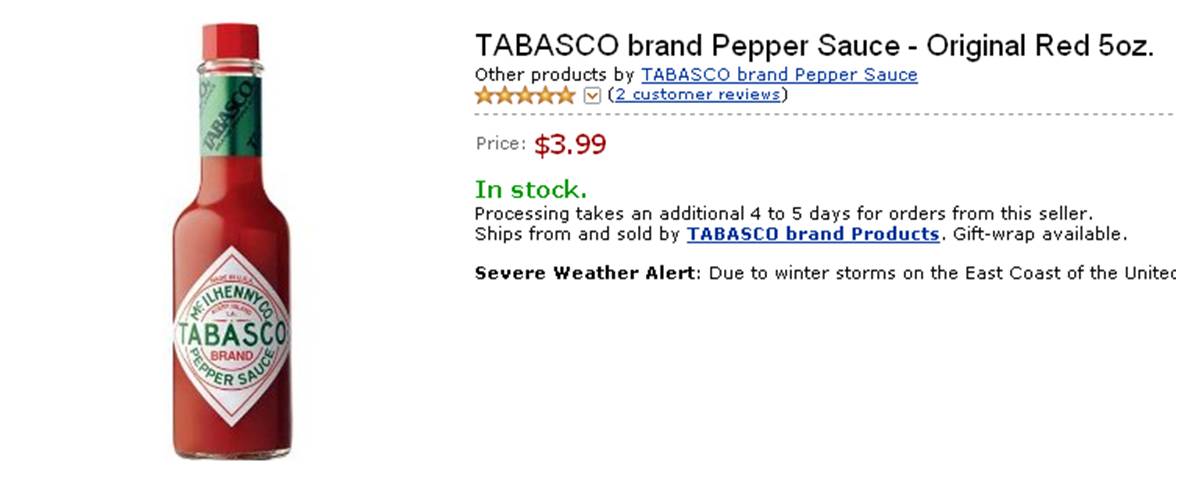
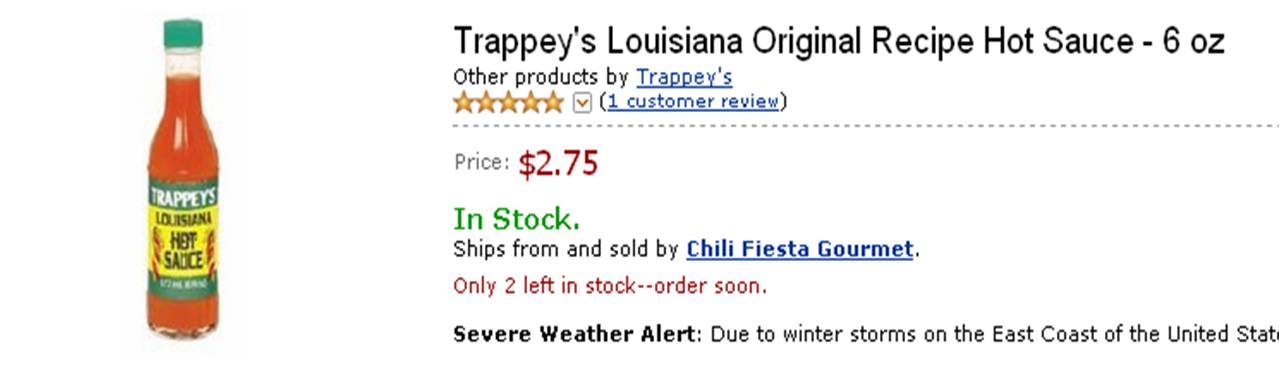
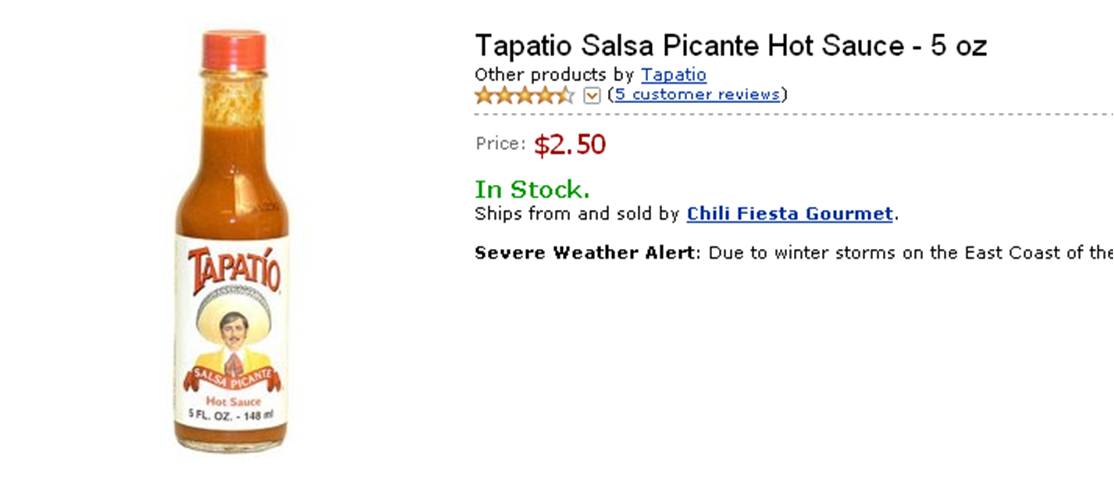
As I walked down the aisle in the supermarket shopping for a particular brand of hot sauce, I realized the price differences among the more popular varieties. When I looked at the more expensive hot sauce brands I noticed something peculiar: the premium hot sauces have more distinctively shaped bottles. So I developed an intellectual property hypothesis right on the spot! (o.k. I need to get some hobbies…)

My Hypothesis: The more expensive and distinctive hot sauce bottles will have 3-D shape trademarks to secure their unique look and feel.

I later verified this (at http://www.uspto.gov) and found that the two more expensive brands with unique design features indeed have registered trademarks. The first one is the Cholula brand with a trademark on its distinctive wooden top. The other is the Tabasco brand with a trademark  on its unique red cap and green label on the neck. The other brands listed below have no such packaging trademarks.

Do Androids Dream of Cell Phones?

The Wall Street Journal reports that an heir to the estate of sci-fi author Phillip K. Dick has alleged that Google’s “Nexus One” phone infringes the author’s intellectual property estate. Mr. Dick is the author of “Do Androids Dream of Electric Sheep?”, which was the basis of the sci-fi cult classic “Blade Runner“. In that futuristic film-noir classic, Harrison Ford plays a bounty hunter who tracks down androids referred to as Nexus-6 models.

The Google phone is not the only phone that borrows from sci-fi cinema to boost its branding appeal. Motorola’s much celebrated Droid cell phone references the many robotic characters that play a key role in the “Star Wars” films. There are, however, important differences between the two cases. Lucasfilm, owner of the “Star Wars” franchise, registered the trademark Droid in 1985 for use with action figures. They maintain that registration and several others related to Droid. No other parties have registered Droid as a trademark. All that meant Motorola required a trademark license from Lucasfilm.

The estate for Philip Dick would have a much stronger claim against Google had they registered Nexus-6 as a trademark. Instead, other companies have registered the word Nexus for various types of goods and services. The critical question is whether the use of Nexus One for the cell phone market creates a likelihood of confusion with regards to sponsorship or source in relation to the Dick estate.

Another interesting twist arises if Google’s future versions of the phone increase sequentially. At some point, the phone may be branded as Nexus Six. By claiming an intellectual property dispute early on, the Dick’s estate may be pre-empting the controversy.

Entrepreneurship Week at Michigan Tech & Poppy King Video

Michigan Tech joined hundreds of other academic institutions by celebrating entrepreneurship week. This week-long event celebrated the spirit of entrepreneurship on campus by inviting famous and inspiring speakers like Poppy King, author of the entrepreneurship book “Lessons of a Lipstick Queen“.

Too see the video of Poppy’s Library reading and lecture click here:

An on-campus elevator pitch competition drew in 16 entries with thousands of dollars awarded in prize money. The spirit of entrepreneurship is alive and well!