J.D. Salinger Sues Author of Catcher in the Rye Sequel for Copyright Infringement

catcher(5)

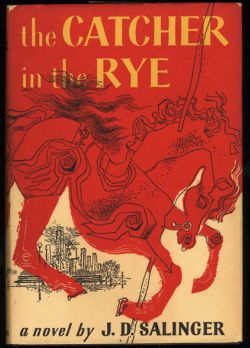
J.D. Salinger, author of the classic Catcher in the Rye novel filed a lawsuit in Manhattan alleging that the authors of a sequel to his acclaimed novel have committed copyright infringement. In the complaint, Mr. Salinger alleges that the unauthorized sequel involves an elderly Holden Caulfield who leaves a retirement home to spend a few days in New York City.

Salinger asserts that his copyright to the first work grants him the exclusive right to authorize any derivative works of that prior and seminal work of fiction. The complaint alleges that the new sequel is an unauthorized derivative, and Mr. Salinger requests the court to grant an injunction against its publication, sale and distribution.

Given the nature of Mr. Salinger’s copyright, and if the injunction is granted, many of us will probably never know how phony or lousy that sequel may have really been.

To read the full complaint click here.

Judge Sotomayor has strong intellectual property background

President Obama’s Supreme Court Justice nominee, Judge Sonia Sotomayor, has ruled on important intellectual property cases in the past. This is a good thing, since the U.S. Supreme Court has recently re-shaped intellectual property law, and adding an Justice with experience in this area is important for future cases dealing with the law of innovation.

Judge Sotomayor wrote an opinion in 2002 that created a strong precedent for cases involving license contracts involving software downloads. That case was Specht vs. Netscape, where Judge Sotomayor ruled that Netscape’s software license terms were not binding on individuals who clicked the prominent download button at the top of the screen before scrolling down to click on the link that opened the license terms.

As a result of this decision, companies now routinely require users to manifest their acceptance of the license terms by clicking on a check box before downloading software.

Can you copyright a tweet?

With the rise of Twitter it was inevitable that intellectual property issues would surface regarding “tweets” (information snippets under 140 characters in length).

Some are concerned that copyright might stifle the ability to reproduce tweets for collaborative projects. Twitter itself states, “We claim no intellectual property rights over the material you provide. Your profile and materials uploaded remain yours.”

So the website tweetCC has decided to take action, and create a list of Tweetsters who have agreed to license their tweets under open terms, using the creative commons license.

Here is the result of my own search:

tweetcc

Recession is the Perfect Time to Innovate

“Recessions signal end of an era; out goes the old way of doing things and room is made for the entrepreneurs to come with new innovative ideas.”

This is according to Kanwal Rekhi, a legendary Silicon Valley entrepreneur and graduate of Michigan Technological University’s electrical engineering program. Dr. Rekhi made this intriguing statement in an article recently published by SiliconIndia Magazine. In this article, he also compares India with the U.S. in the 70’s and 80’s, when many great start-ups were created.

Lecture in Munich

Next week I’ll visit Munich, labeled as one of most beautiful cities in Europe to present a paper and lecture at the Max Planck’s Munich Intellectual Property Law Center (MIPLC).

The subject of the talk is patent advocacy before the U.S. Supreme Court. My co-author James Conley and I have measured the patent advocacy of various types of firms when they file briefs before the highest court of the land. In the past few years, the Supreme Court has taken a more active role in shaping patent laws and policy. This is in contrast to Congress, which has largely stalled in the area of patent reform.

What are some of the key issues facing patent reform today?

First, there is the issue of first-to-invent vs. first-to-file. The U.S. is one of the few countries that follows the first-to-invent rule. In most other countries, whoever wins the race to the patent office gets the patent (first-to-file rule). According to one senior Patent Office official I spoke with recently, there is a strong chance we might adopt the first-to-file rule. Some believe this would favor large companies over the small inventor.

Another major issue is damages. Patent infringement damages, particularly if the infringement is found to have been willful, can be extremely high. Some advocates, particularly the larger companies, want to limit damages.

Some of the theses issues have been recently addressed by the Supreme Court, the topic of our research.

How to think like an i-preneur

I define an i-preneur as someone who can extract value from intellectual assets. An i-preneur has clear goals and procedures to generate income from their knowledge-based assets.

Understanding how intellectual assets generate wealth is the biggest challenge today’s entrepreneurs face. It is also among the biggest opportunities for wealth creation.

I’ve seen many i-preneurs in action. Here is a brief list of the traits that make them stand out and win in a competitive market:

1. They understand how intellectual assets fit within their big picture strategy.

2. They link up their key intellectual assets with their business model, e.g. licensing, exclusive manufacturing, trademarking and branding.

3. They know how to trade their intellectual assets for valuable resources with critical partners. The best i-preneurs I have met trade their intellectual assets for critical and scarce resources like distribution channels, manufacturing capacity, exclusivity and co-branding opportunities.

4. They understand how to bundle their assets and manage patents, trade secrets, designs, copyrights and trademarks to build a strong overall portfolio.

5. They invest in intellectual assets that have the promise of commercial value.

6. They survey the intellectual landscape to secure a strong position.

7. They understand the ins and outs of the options granted by intellectual rights.

8. They manage their intellectual properties, and never expect others to do so.

9. They realize that intellectual assets are only one piece of a larger business coordination puzzle.

10. They can put a dollar value on their rights.

The Patent Piler

I met Allan Tokuda when I was a Teaching and Research Fellow at Northwestern University. I was helping teach a course on Innovation and Invention in the engineering program. Allan was one of the brighter and more inquisitive students. I knew he had some remarkable qualities when, before class one day, he took out a Rubik’s Cube. He could consistently scramble the puzzle and solve it in less than two minutes.

Allan and I eventually put our minds together to attack the problem of patent claim language and its obfuscating qualities. Allan brought top notch software coding and logical analysis. I brought my knowledge of claims and claim structures and the problems lay people and inventors routinely face when they try to read these sentences. Patent claims, for those new to patents, are the legal definition that describes the property boundaries of a patented invention. Patent claims are what get litigated in court and are located at the very end of the patent document.

The result of our combined efforts is something called the Patent Piler (at this Website). It is an open source project and resource guide that allows anyone to look up a patent by the patent number, search and compare any of that patent claims with other claims in the patent. Here is an image of how it works.

Patent Piler
Patent Piler

The tool, as shown above, highlights the differences between claims in the same patent.

Why is this useful? Oftentimes the most confusing thing about reading patent claims is distinguishing why one claim is different from another. One claim might be different from another due to a difference of just a few words.

The software also does useful things like break down claims by their type, for example methods, products, chemical compounds  or machines. The software also allows you to select independent claims, those claims which stand by themselves and are modified by subsidiary claims, called dependent claims.

Try it out for yourself. If you don’t have a specific patent to analyze, try inputting this curious patent number in the box: 6584450

If you like to code and want to make reading patent claims easier, try improving the source code, it is freely available at this site.

A quick note: for now the software runs great on Firefox, not so great on Internet Explorer.

Starwood Hotels Alleges Trade Secret Theft

W Hotel
W Hotel

Starwood Hotels, owners of the W Hotel brand of boutique hotels, filed a lawsuit against Hilton Hotels and several former Starwood executives hired by Hilton. The lawsuit alleges trade secret infringement.

The complaint alleges that Hilton lured key W Hotel executives and that these individuals misappropriated W Hotel trade secrets to help Hilton with the launch of its Denizen brand of boutique hotels. The trade secrets listed in the complaint include:

  • Proprietary marketing and demographic studies that cost more than $1,000,000 to develop.
  • Training and operational materials.
  • The names of designers, property owners and developers.
  • Guidelines for how to create the “Ultimate W Experience’ in converted properties.
  • A dining concept called a “restro-lounge” designed to optimize food and beverage services in the W Hotel lobby-bar areas.

This is just another example of how far-reaching intellectual property has become. As brands become more important and as innovation touches on customer experiences created by companies, the intellectual efforts used create these assets will increase in strategic importance.  This kind of competitive knowledge is safeguarded by contracts called confidentiality agreements. Starwood Hotels required its executives to sign them, and this may be an important factor in this trade secret fight.

To read the entire complaint filed in District Court of New York, click here:  starwood20complaint

Blogger Sues Goldman Sachs For Domain Rights

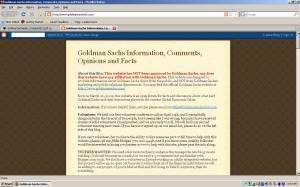
It would be an understatement to say that Michael Morgan dislikes Goldman Sachs. Mr. Morgan expresses his vitriol against the large investment bank in not-so-subtle terms. Mr. Morgan writes on his blog: “Yes, I am short Goldman Sachs stock. I believe this company is evil and should not exist. We need to begin to break up companies that have as much control over world finances as Goldman Sachs.”

His explicit contempt, however, is not what drew the ire of Goldman Sachs and its attorneys. Instead, it’s the domain name that Mr. Morgan reserved to express his views. The domain name for Mr. Morgan’s blog is goldmansachs666.com. As Mr. Morgan writes, his blog’s purpose is to serve as “an open forum for facts and discussion about what part Goldman Sachs and their executives played in the current Global Economic Crisis.


goldman

On April 8, 2009 Goldman Sachs’ attorneys fired-off a cease and desist letter to Mr. Morgan. The letter states “your use of the mark Goldman Sachs violates several of Goldman Sachs’ intellectual property rights, constitutes an act of trademark infringement, unfair competition and implies a relationship and misrepresents commercial activity and/or an affiliation between you and Goldman Sachs which does not exist and additionally creates confusion in the marketplace.”

gs_letterimage

Mr. Morgan had several options at that point. He could have ceased using the domain name as requested by the letter. He could have ignored it and risked further legal actions. Or, sue Goldman Sachs and petition a court to uphold his use of the domain name as a legal use, and not a trademark infringement as claimed by Goldman Sachs. Mr. Morgan chose this last option, and has filed a complaint in the United States District Court – South Florida. Click here to read the complaint.

Liquidators Buy Bankrupt Brands For $175 Million

The New York Times has a great story on entrepreneurial companies that have purchased bankrupt company brands. Among them: Sharper Image, Linens ’n Things and Bombay.The price for these three trademark rights is estimated at $175 million.