Letter or Spirit?

Business Insider posted a story recently about Facebook and the news the company has made working with Goldman Sachs to obtain significant capital investment without going public.

The story boils down to Facebook wanting to trade stock for a capital infusion. There is no shortage of people wanting to invest in Facebook stock. A thorny issue arises, however, if the number of Facebook stock owners of record increase to 500 or more individuals. If that is the case, Facebook must comply with the Securities and Exchange Commission (SEC) disclosure laws, which are expensive to comply with and  reveal sensitive financial and strategic information. Facebook is not quite ready for that step and has enlisted the financial experts at Goldman Sachs to engineer a special purpose entity that would buy up to $1.5 billion in Facebook stock and become the owner of record.

The rub lies in the fact that Goldman Sachs would then sell the shares to potentially hundreds of private client investors. The Business Insider story discusses that Facebook and Goldman Sachs may have legal grounds under the SEC rules to argue that the transaction does not increase shareholders beyond a single owner, the special purpose entity. The rule, however, may prove to be a sword of Damocles, since the SEC rule does not allow the transaction if the stock issuer knows, or has reason to know, that the special purpose entity is used primarily to circumvent the rule concerning 500 shareholders or more. By engaging in the transaction, Facebook may be heading for going public and complying with the SEC disclosure laws without listing on a major stock exchange.

As a professor, I found this to be a good case to discuss in class, not just because many students enjoy hearing about Facebook. The case also illustrates an important point about a bigger issue facing business and legal regulation. The point is whether a business should strive to comply with the letter of the law, or go beyond this and seek to comply with its spirit. The SEC rule mentioned above has a built-in provision that guides enforcement of the law’s spirit. Many other important regulations lack this type of provision, however.

Ultimately, the whole issue of compliance with the SEC’s disclosure rules triggered by reaching 500 shareholders or more may amount to little more than a smokescreen for Facebook. The transaction with Goldman Sachs using the special-purpose vehicle places a much higher value on Facebook stock. Those who invested in Facebook prior to this transaction just saw their paper net worth increase substantially. Also, at the time of Facebook’s inevitable public offering and listing on a stock exchange, whoever is the lead book runner and investment banker to the transaction (Goldman Sachs?) will have strong precedent and argument to sell the stock to the public (the rest of of us) for at least as much as it was valued during this most recent transaction.

As with most legal issues involving Facebook, this is a case worth watching.

2010 in review

The stats helper monkeys at WordPress.com mulled over how this blog did in 2010, and here’s a high level summary of its overall blog health:

Healthy blog!

The Blog-Health-o-Meter™ reads This blog is doing awesome!.

Crunchy numbers

Featured image

A Boeing 747-400 passenger jet can hold 416 passengers. This blog was viewed about 3,000 times in 2010. That’s about 7 full 747s.


In 2010, there were 10 new posts, growing the total archive of this blog to 65 posts. There were 14 pictures uploaded, taking up a total of 4mb. That’s about a picture per month.

The busiest day of the year was January 6th with 84 views. The most popular post that day was Liquidators Buy Bankrupt Brands For $175 Million.

Where did they come from?

The top referring sites in 2010 were stumbleupon.com, WordPress Dashboard, inventuscap.com, younoodle.com, and linkedin.com.

Some visitors came searching, mostly for matsuflex, kanwal rekhi, ryan matsunaga, rekhi, and tool academy matsuflex.

Attractions in 2010

These are the posts and pages that got the most views in 2010.

1

Liquidators Buy Bankrupt Brands For $175 Million April 2009

2

Matsuflex March 2009

3

Watch Kanwal Rekhi’s Lecture at Michigan Technological University March 2009
5 comments

4

Vote For Your Favorite Shape Trademark September 2009
6 comments

5

Google Obtains Design Patent For Its Website September 2009
2 comments

Betty Dukes v. Wal-Mart – Part II

In the prior post, I mentioned the case of Dukes vs. Wal-Mart, where the trial and appellate courts certified more than a million women in a class-action lawsuit alleging employment discrimination at Wal-Mart stores across the United States. If you are the defendant corporation, you now face the scenario in which millions of individuals allege that they suffered similar harm because of systematic employment practices at your organization.  But, how does a plaintiff offer evidence that these disparate individuals located all across the nation indeed faced the same type of harm because of the actions of thousands of different Wal-Mart managers? The ideal way is to interview every single manager and all the allegedly harmed employees. That, however, would be too costly and impractical. Instead, a plaintiff’s attorney hired an expert witness trained in social science research.

In the Dukes vs. Wal-Mart case, the plaintiffs hired the renowned sociology professor William T. Bielby to perform what is known as a social framework analysis. From what I can gather by reading the expert report, this type of analysis surveys the scientific literature on gender-based discrimination to find the organizational and situational attributes that are likely to give rise to cases of gender stereotyping and discrimination in the workplace.  Once the literature is surveyed, the theoretical propositions about discrimination and stereotyping are applied to the case at hand, i.e. Wal-Mart’s employment practices and routines.In this way, the expert made an informed assertion based on primary evidence related to the case by interviewing managers, reading memos, and analyzing policy manuals, organizational charts and statistics that may suggest unlawful gender-based differences in pay and promotion due to systemic employment practices.

The defense, in this case, vigorously attacked the expert witness’ methodology, claiming that it was speculation, and was never tested to show rigorous causality. An unreasonable inference would be required, the defense argued, to conclude that the social framework analysis actually shows Wal-Mart’s employment practices lead to gender based discrimination. To establish causation, the plaintiff’s expert would have to survey managers to find out if there is a causal link between Wal-Mart’s practices and the managers’ behavior towards women. This, however, was not the case and the plaintiff readily concluded that the purpose of social framework analysis was not to establish actual causation. The plaintiff defended the method by saying:

“Wal-Mart’s insistence that Dr . Bielby quantify the effect of stereotypes is similarly lacking in merit . In his deposition, Dr . Bielby readily admitted that he did not calculate how often stereotypes affect decision-making at Wal-Mart. This is not a flaw that makes his opinion unreliable. Dr. Bielby used social framework analysis to show that Wal-Mart created a system that increased the likelihood of stereotyping, and which provides an explanation for the statistical disparity between men and women in pay and promotions.” (Plaintiffs Opposition to Defendant Wal-Mart Stores, Inc.’s Daubert Motion, to Strike Declaration, Opinion and Testimony of Plaintiffs’ Expert William T. Bielby, Ph.D., at.11).

The plaintiffs also argued that evidence standards required that the expert’s testimony had to be admitted to argue that the class of more than a million women should be certified.They stated:

“Because the Court acts as the gatekeeper, not the fact-finder, the Court is not charged with deciding whether the expert’s opinion is factually correct .’ See In re Paoli R.R. Yard PCB Litig., 35 F.3d 717, 744 (3d Cir. 1994) (stating that plaintiffs “do not have to demonstrate to the judge by a preponderance of the evidence that the assessments of their experts are correct, they only have to demonstrate by a preponderance of evidence that their
opinions are reliable” and that “[t]he evidentiary requirement of reliability is lower than the merits standard of correctness .”). (Plaintiffs Opposition to Defendant Wal-Mart Stores, Inc.’s Daubert Motion, to Strike Declaration, Opinion and Testimony of Plaintiffs’ Expert William T. bielby, Ph.D., at.1-2).

As indicated by the plaintiffs, it ultimately is the responsibility of a jury, and not a judge, to determine the credibility of the expert’s social framework analysis, which suggests, but does not causally establish that Wal-Mart’s practices create a likelihood of gender discrimination. If the expert testimony is admitted and the judge finds it is reliable, the judge may use it, however, as he did in this case, to certify the class and allow the more than one million women to proceed as combined plaintiffs. In this case, the class amounted to a record-breaking number of plaintiffs included in one case.

The U.S. Supreme Court is scheduled to hear Dukes vs. Wal-Mart in the 2011 term.

Betty Dukes v. Wal-Mart – Part I

Can 1.5 million women stand together in a class-action suit to sue Wal-Mart for employment discrimination?

That’s the narrow legal issue that the U.S. Supreme Court recently agreed to decide by reviewing the Ninth Circuit appellate case Betty Dukes v. Wal-Mart. This specific issue gets to the heart of what is known as a class-action lawsuit, which allows bundling the complaints of similarly situated plaintiffs into one lawsuit. In this case, a woman named Betty Dukes has raised allegations the lower trial and appellate Courts found were shared by more than 1 million female Wal-Mart employees. Ms. Dukes and the the other plaintiffs in the suit allege that women who work for Wal-Mart:

(1) are paid less than men in comparable positions, despite having higher performance ratings and greater seniority; and

(2) receive fewer — and wait longer for — promotions to in-store management positions than men.

Whether these plaintiffs were appropriately grouped together and certified as a “class” by the initial trial court in California is the issue that will be examined in the Supreme Court’s pending review. This will be a very important decision that will impact the viability of other class-action lawsuits, and by extension, the liability that American corporations may face in a wide range of future class action lawsuits.

In several upcoming posts, I will examine another issue that is under-analyzed, yet equally important and fascinating: I’ll discuss and analyze the role of expert witnesses who rely on social science research to support allegations made by plaintiffs. These experts are an important source of information that juries rely on to help determine factual matters that determine whether plaintiff wins or loses. For example, a central claim made by the plaintiffs in the Dukes vs. Wal-Mart case is that:

“Wal-Mart’s strong, centralized structure fosters or facilitates gender stereotyping and discrimination, that the policies and practices underlying this discriminatory treatment are consistent throughout Wal-Mart stores, and that this discrimination is common to all women who work or have worked in Wal-Mart stores.” (Dukes v. Wal-Mart Stores, Inc., 509 F.3d 1168, at 6147 (2010).

In the next post, I’ll discuss the methods and social science literature that Dr. William T. Bielby, the plaintiff’s expert in the Dukes v. Wal-Mart case, relied on to determine that in his opinion: “Personnel policy and practice at Wal-Mart as implemented in the field has features known to be vulnerable to gender bias”.

Dr. Bielby is a sociology professor, and his expert determination based on a review of social science literature was admissible in court, despite some interesting challenges made by the defendant to discredit the evidence and testimony, which I also will examine in an upcoming post.

New inquiries

Photo by readerwalker on Flickr of a hallway at Florida State University

Dear Readers:

It’s been more than 100 days since I last updated. The last time I added an entry, I was living in the Upper Peninsula of Michigan enjoying 70 degree weather, clear summer days and sunsets at 9:00 p.m. in the evening. There is much to say in favor of the far north. Now, I’m updating the site from the Deep South, in a place called Tallahassee, Florida. One colleague recently teased: “you’re not in Kansas anymore!” So true.

I have high hopes for updating regularly. I also want to move the content in a new direction, including a broader scope and greater emphasis on culture and society.

Sincerely,

Prof. Orozco

Independent Designers: Here’s a Powerful Tool to Combat Knock-Offs

I’m always troubled when I hear stories about independent designers who are ripped off by knock-off artists, large retail chains and unscrupulous exporters who take advantage of low-cost manufacturing costs to catch a free ride from a designer’s work.

Reporter Christina Binkley wrote an interesting article on this very topic in The Wall Street Journal on April 29. The article discusses how the small, independent makers of the popular Shashi bracelet saw their unique fashion accessory imitated and sold for a fraction of the cost by a large corporate retailer shortly after the product gained mass appeal.

Innovators often fall victim to this type of intellectual property theft as free riders imitate a design and exploit a cost-based advantage that erodes the original design’s exclusivity, leading to brand erosion and foregone sales. From numerous articles I have read, it seems that this happens all too often to designers, and that all they can do is throw their arms up and accept this sorry state of affairs. As The Wall Street Journal article reports, most designers believe that the only response is to keep designing and hope their new creations will keep them above water.

I’d like to offer designers another solution based on strategic knowledge of intellectual property. Designers can register and protect their designs as numerous forms of intellectual property (IP), including trademarks, design patents, copyrights and trade dress. The Wall Street Journal article mentions this fact and discusses how these IP assets rarely prevent the flood of copycats.

The Wall Street Journal article, however, does not discuss a little-known procedure that IP owners can initiate that could offer them a powerful shield in their arsenal. The procedure is IP recordation with the U.S. Customs and Border Enforcement Authorities.

The process is actually quite simple. After you have registered your IP as a trademark, design patent, copyright or trade dress, all you need to do is file a short form with Customs and pay a $190 fee. The form is extremely simple and asks the IP owner to provide a registration number, describe the intellectual property, list parties authorized to use the mark, and provide an image of the intellectual property.

To access a screen shot of the actual form, click here.

Once your IP is recorded with Customs, you may then notify the office of any suspected parties that may be importing goods that infringe your IP. Customs may then decide to seize and impound the knock-off goods at any U.S. port while it conducts an infringement assessment. Impoundment creates a difficult scenario for the alleged infringers, including the foreign manufacturer and the domestic importers, which may include distributors and retailers. The procedure creates a cost for all these parties, buys the designer precious time to retain exclusivity for their designs (especially important when the design in question ties into a current fashion trend), and sends a clear signal that the designer means business.

The Wall Street Journal article mentions that designers may send cease-and-desist letters, and this is an important weapon in the independent designer’s arsenal. However, large companies tend not to respect these letters as much as when a big corporation with deep pockets is behind the letter. For an up-and-coming designer, having knock-off goods impounded is a much stronger weapon, especially when many companies that sell imposters have those items manufactured in China or other locations overseas.

Customs provides statistics on what types of goods have been seized under this impoundment procedure. In 2009, it conducted 14,841 separate IP-related seizures with confiscations worth $260.7 million. To view the statistics, click here.

To learn more about the impoundment procedure and how you can take advantage of it to protect your intellectual property, visit the Customs website here.

Designers, please consider using this legal tactic to protect your hard work and creativity under a system of fair trade for everyone.

Hot Packaging Gets Trademarked

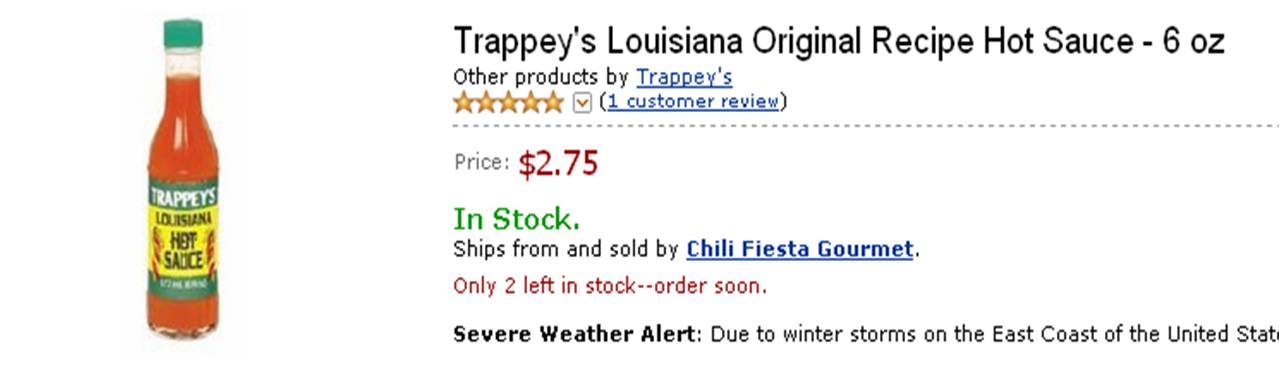
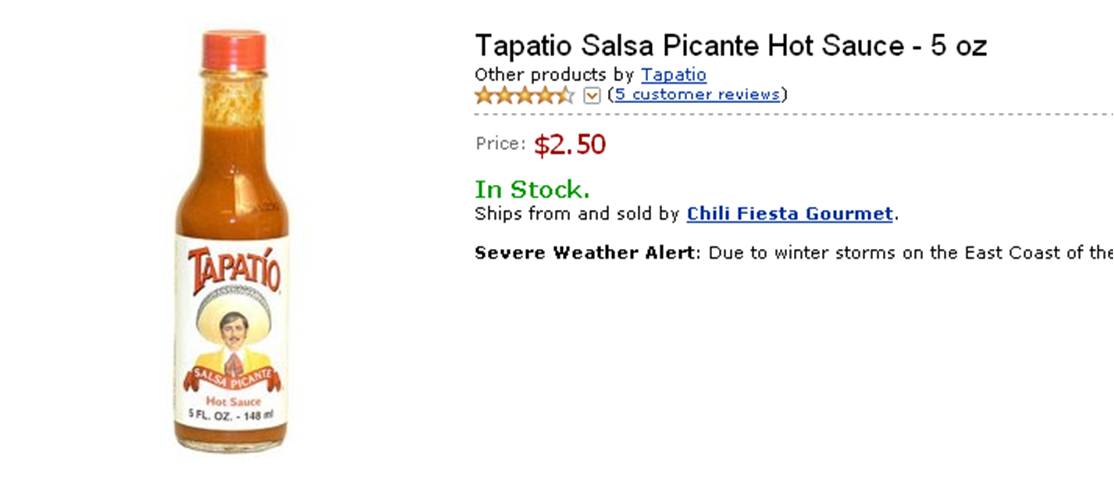
As I walked down the aisle in the supermarket shopping for a particular brand of hot sauce, I realized the price differences among the more popular varieties. When I looked at the more expensive hot sauce brands I noticed something peculiar: the premium hot sauces have more distinctively shaped bottles. So I developed an intellectual property hypothesis right on the spot! (o.k. I need to get some hobbies…)

My Hypothesis: The more expensive and distinctive hot sauce bottles will have 3-D shape trademarks to secure their unique look and feel.

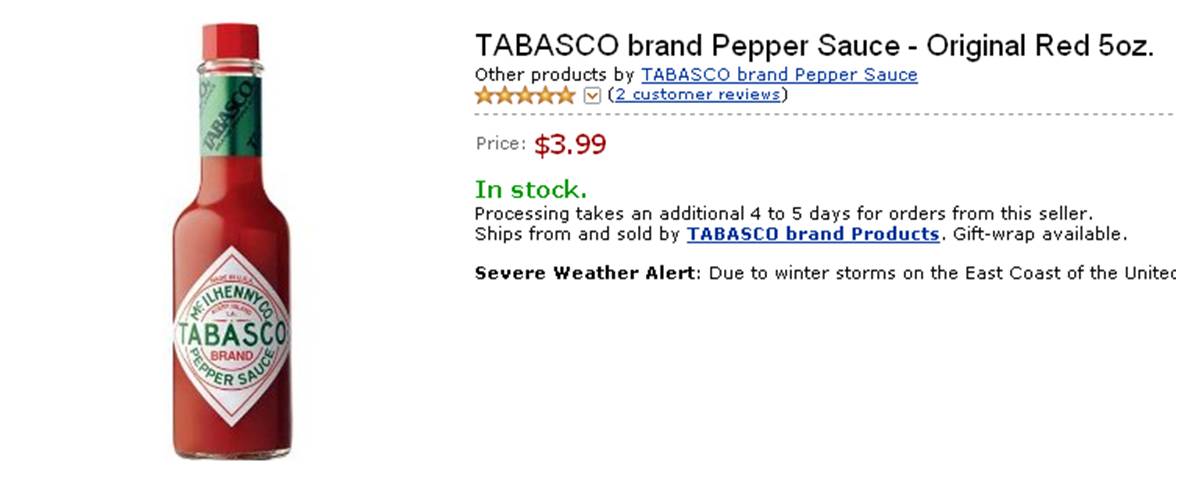
I later verified this (at http://www.uspto.gov) and found that the two more expensive brands with unique design features indeed have registered trademarks. The first one is the Cholula brand with a trademark on its distinctive wooden top. The other is the Tabasco brand with a trademark  on its unique red cap and green label on the neck. The other brands listed below have no such packaging trademarks.

A librarian’s perspective

Molly Kleinman, the fourth speaker of the lecture series (see posts below),  is a copyright specialist and librarian at the University of Michigan. Her job hinges on allowing people to achieve their research goals, and her job at times can be impeded by copyright laws. 

I asked her if she viewed Google as a threat to libraries. They’re not, to her. They actually make her job easier and serve as just another tool.

She also mentioned how libraries and their special databases are often unrecognized, since Google uses them extensively but never tells you that they are using a library’s database.

A big concern Molly has with copyright is that in the pre-Web era, libraries could buy a phyiscal copy of a book or journal and keep the tangible copy as long as it did not disintegrate. Now, she has seen an increased trend in licensing content. Basically, the libraries are owning less and less physical materials, and hence are owning less physical content. When they license the information, the terms of a license contract dictate the terms of use. These terms often mean no copying, no backing up, no storing in other devices, and no saving on the shelf. This means the library has to keep re-paying the content owner for re-newed access to the information periodically. This has been great for content owners who have shifted their information to digital platforms. But this is bad for the consumer who now no longer owns any tangible product where the data has been stored.

If this keeps happening, used book stores might be out of business some day?

Intellectual Property Controversies

This weekend, I gave a non-traditional trademark lecture here at Michigan Tech, at the Rozsa Center for Performing Arts.

The lecture was part of the “Intellectual Property Controversies” lecture series. The event was moderated by Prof. Michael Bennett from Vassar, and included Danny O’Brien from the Electronic Frontier Foundation (EFF), Molly Kleinman from the U. of Michigan Library and Prof. Kembrew McCloud from the U. of Iowa.

The event really highlighted the fact that intellectual property is controversial. For example, Kembrew gave a sneak preview of his film “Copyright Criminals”. The film is a about the hip hop artists who “borrowed” from prior artists when they sampled many songs with newly available sampling machines.

It brought to my mind the very funny MTV clip of Vanilla Ice arguing how his bass line for “Ice Ice Baby, was different from David Bowie’s  “Under Pressure”.

I’ll write more on what each of the speakers presented at this controversial event. This includes my lecture on non-traditional trademarks, namely how the Chippendale’s dancers are trying to get a trademark on their bow tie and cuffs.

For the bare facts on that unique trademark application, visit the TTAB Blog story.

If you know any intellectual property controversies, please share them. I’d like to discuss them with the community.