A Fail Whale Trademark?

I recently sent a call to readers asking for stories to blog about. Mr. Joe Scarry from Chicago kindly sent me a recent article in the New York Times Magazine profiling the curious rise of the Fail Whale.
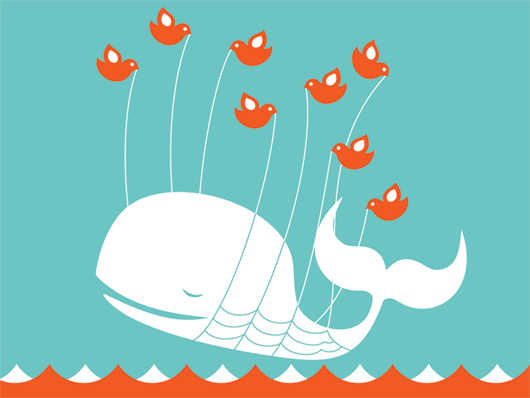
The Fail Whale
The Fail Whale

The Fail Whale image was created by Ms. Yiying Lu. Ms. Lu initially created the image to send as an e-card to a friend. Eventually, she uploaded the image to iStockPhoto. Under the iStockPhoto image license terms, the image was made available for a few dollars under a perpetual license.

Things unfolded when Mr. Biz Stone, one of Twitter’s founders, purchased an iStockPhoto license of the whale image. Mr. Stone used the image so it would appear on Twitter whenever that site experienced an outage due to heavy traffic (a smart branding move in my opinion since the image is funny, unexpected and connotes teamwork). The Twitter community quickly grew fond the whale image. One of the fans named the image the “Fail Whale”. Another fan tracked down Ms. Lu and her online fame only grew from then.

There is now a Fail Whale fan club, Flickr site and community art site. In true Web 2.0 spirit, the Fail Whale image has become part of a community’s culture.  The community owns the image, freely adapting the image in new ways. It was a community member who first named it the Fail Whale. Many of the community websites use the Fail Whale term without worries about ownership. Here is what the Fail Whale fan site says about itself:

“This site is here to poke fun at the people who seem to take online social network downtime a little too seriously. Failwhale.com is not affiliated with Twitter. Rather, it’s a love letter to the hard working folks at all of our favorite online social networking sites who lose sleep over the concept of scalability.”

The community for all purposes owns the whale. Will that someday change since it has become valuable? Ms. Lu already took the image off the iStockPhoto site which allowed users to perpetually license the image for a low price. She has also  recently created an official Fail Whale Merchandise Site. The next logical step to build a business around the Fail Whale is to apply for a trademark, and then license the trademarks for merchandising. (Note: a copyright can eventually become a trademark if it identifies a source of goods).

Will the Fail Whale remain open for the community’s free use? Would that be the best thing? Or, will it be Generation Y’s version of Micky Mouse or Hello Kitty? The next time you see the Fail Whale look closely. You just might see a small round trademark symbol.

P.S. Have you lately come across an intellectual property controversy that piqued your interest? If so, please send it my way.
Pimp My Trademark

I recently watched the MTV show “Pimp My Ride“, in which people with junkers contact the show with the hopes of getting their cars souped -up. The show I happened to watch involved a pretty beaten up Honda Civic. During the car’s transformation, the team installed Lambo doors on the Civic. Lambo doors are car doors that swing up like those in the famous Lamborghini models from the ’80’s (just think of Miami Vice).

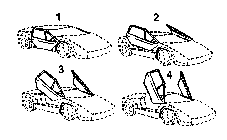
I recalled seeing a trademark at one point owned by Lamborghini on the motion of its doors. I did a little research at the U.S. Trademark Office and found the live trademark registration # 2793439 owned by Lamborghini. Here is the image of the trademark as it is currently registered to the company:

Image of car doors swigning up to open.
Image of car doors swinging up to open.

This registered trademark was issued to Lamborghini in 2003 and “consists of the unique motion in which the door of a vehicle is opened. The doors move parallel to the body of the vehicle but are gradually raised above the vehicle to a parallel position. The matter shown in dotted lines is not part of the mark.”

Did Lamborghini license this trademark to the folks involved in MTV’s program? If not, did they commit trademark infringement?

It seems that several companies make and sell kits that allow mechanics to transform any old regular car doors into the pimped out Lambo doors. Most of the kits I have seen advertise the doors as “Lambo doors”, giving proper attribution to Lamborghini as the pioneers.

Back to the trademark infringement. It seems to me that the kit manufacturers would not be infringing the trademark shown above since they are only selling the specialized hinges that make the car doors rotate upwards. That is a functional product (subject to patent laws) and not trademark, which only extends to source identity. If you go back the trademark listed above, Lamborghini owns the right to how car doors actually move on an actual car. So, perhaps the person who owns the car commits the trademark infringement every time they open and close their car doors!

Is Lamborghini going to do the same thing the recording industry has done and go after individuals? Let’s hope they have better things to do.

Boundless trademarks

Trademarks have a dual purpose: to prevent consumer confusion by preventing any company from usurping the identity of another firm; they also are private property rights that secure a company with goodwill and brand equity.

Trademarks have lately been controversial since the scope of trademark property has expanded a lot in recent times. Some trademarks can even legally become “famous”. When a mark is legally recognized as famous it can stop other users of the mark even if there is zero consumer confusion. This has created problems for companies in totally different markets and contexts who try to use a similar mark that no one would confuse with the famous mark, e.g. using rolls royce for a dry cleaning service. It has also created problems for people who try to comment on a brand through parody or social commentary (see discussion thread below dealing with the Barbie). Owners of famous marks can potentially censor others who tarnsih the mark in any way.

The other controversial development is the use of trademarks to cover sensory perception, e.g.  strange trademarks, where companies secure a property right to things like sounds, colors, shapes and motion. That was the subject of my recent lecture, and a Wall St. Journal article I wrote last year about how Apple received a shape trademark for the iPod. If you would like to see the recent lecture slide show please click here:

The Shape of Things to Come: Non-Traditional Trademarks from the iPod to the Chippendale Dancers

I’d love to hear about what your  thoughts are on trademarks!